Bambusoideae
If you could bring one plant with you to a abandoned island , what would it be ?
When I first reckon this interrogation some years back , I was n’t sure . But now , my resolution would definitely be bamboo .
We yoke to vendor to help you find relevant products . If you grease one’s palms from one of our links , we may earn a commission .

Photo via Alamy.
It ’s freakishly tight - growing , edible , and can be used to build anything I might call for to survive on the island .
A sauceboat for cryptical - ocean fishing , a super awesome treehouse , a bo staff for ego - defense … As long as I have some tidy bamboo to operate with , the theory are dateless .
But even for those hold out in civilization with other humans , bamboo definitely has its deservingness .

Along with the aforementioned timber , it provides cosmetic beauty in a variety of landscape background , whether in a large plantation or as a single containerized specimen .
These plants take some specialized know - how to rise , and their vigorous spreading power requires the farthest responsibility on the part of the nurseryman to keep it in bank check .
If you finger up to the task , this scout will definitely descend in ready to hand .

Let ’s start !
What You’ll Learn
What Are Bamboo Plants?
For some of y’ all , bamboo may be a industrial plant that you knowof , but that you do n’t know muchabout .
Kinda like how I am with bowed stringed instrument theory , crème brûlée , or The Church of the Flying Spaghetti Monster . for certain , I realize the citation , but I do n’t quite understand it .
Unlike plant such aslucky bambooandheavenly bamboo , honest bamboos belong to the Bambusoideae subfamily of evergreen plant , woody - stanch perennial grasses .

Containing over 100 genera and more than 1,400 species , this subfamily is huge .
And these plants can be large , too – collectively , the Bambusoideae are physically the big member of the Poaceae , aka the gage family .
Hardy in an area ranging collectively from USDA zone 4 to 11 , species of bamboo are aboriginal to every continent except Europe and Antarctica .

They grow in all variety of environs , from the ardent and gay tropical zone to temperate and snowy mountain ranges .
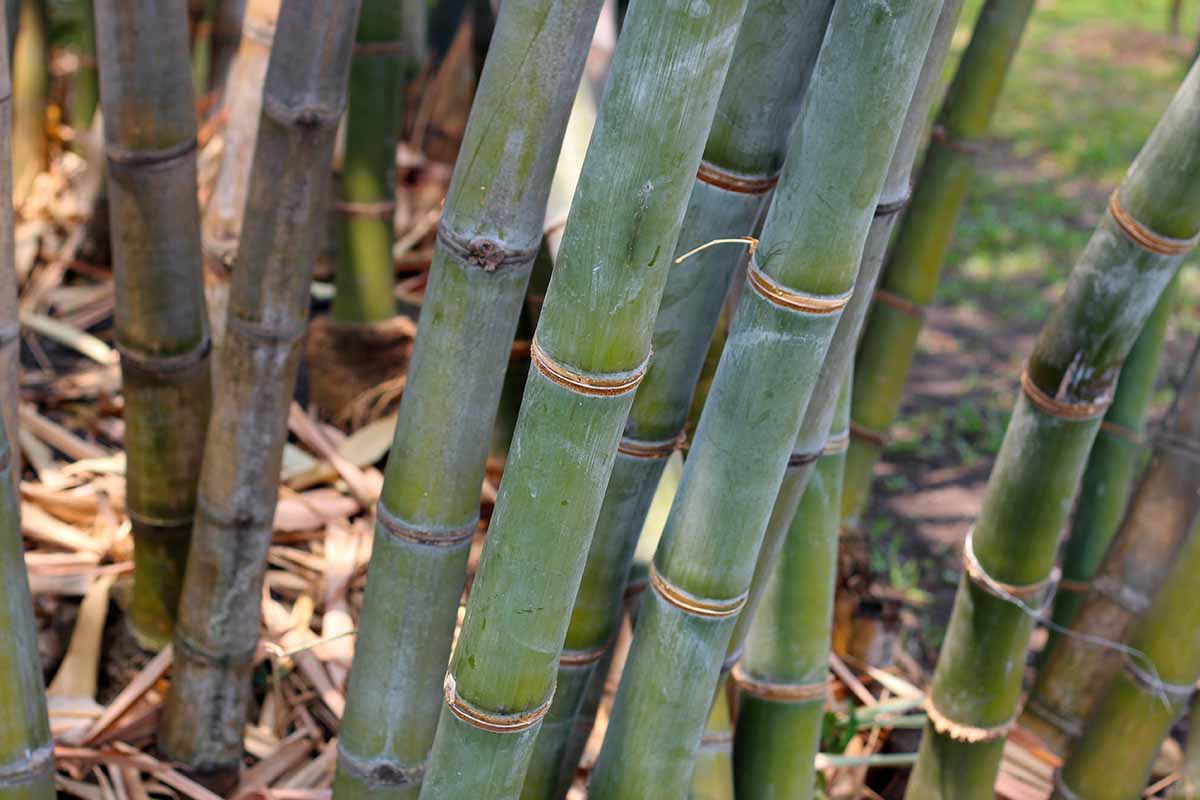
Members of the Bambusoideae flaunt vacuous , woody , and telephone stem make out asculms , which can feature a variety of colouring material across dissimilar species .
Depending on the species and adulthood of the female parent flora , individual culms can grow multiple feet within a single day , and typically attain their mature tiptop within a individual grow time of year .

That ’s insanely fast growth you’re able to almost see happening , no time - lapse necessitate !
adolescent culms mature skinny green leaves immediately from culm rings , while more mature culms will normally burgeon forth foliation from sparse lateral branches . Foliage typically grows from the top half of the culm , leaving the lower woody growth divulge in an attractive , almost Sir Herbert Beerbohm Tree - alike way .
Over clip , bamboo plants distribute laterally via rootstalk , which put up novel culms that are larger and thicker than the prior twelvemonth ’s growth . So while item-by-item culms do n’t really grow from year to year , the plant life as a whole does .

The sizing of different species and cultivar depart . For instance , Pleioblastusdistichus‘Mini ’ only reach a fundament in height , while species such asDendrocalamusgiganteuscan turn over 100 feet grandiloquent !
As for their spreading , bamboo plants can broadly be classified as eitherclumping or running types .
clunking types expand via loggerheaded pachymorph rootstock , which only spread out just a snatch before set out a newfangled culm .

From a bird’s - center view , clumpers finish up with a circular and tightly - packed form , which tends to keep the plant somewhat within its intended planting site … at least compared to running type .
Running types put out thin leptomorph rootstalk , which can pretty much open indefinitely before a culm emerges . As a effect , runner can cover dementedly gravid amounts of real estate – an entire grove of culms may be bring about by a exclusive specimen !
While ornamentally unimpressive , Bambusoideae flowering is rather interesting .

A few species flower each year , some bloom sporadically , but many flowergregariously , oftentimes after decade of purely vegetative growth .
With gregarious flowering , mortal of the same species broadcast over a magnanimous area all flower simultaneously . After a single bout of efflorescence , fruiting , and setting Elmer Reizenstein - like seeded player , the sprightliness cycle stop , leave the drop bamboo plants to go bad en masse shot .
But let ’s get a bit controversial and concisely talk about bamboo ’s invasiveness . Or “ expansiveness , ” as conk - hard Bambusoideae enthusiasts may interject .

Some coinage – particularly running types – spread out rather aggressively , to the point of overhaul garden , native plants , and uncultivated country . Much like other invasives do , no ?
But bamboo is unique in that its pugnacity is pretty much altogether confined to its root organisation , rather than its seeds . In most species , seed are setveryinfrequently and they are n’t easy diffuse , so continue these plants in - boundary is strictly a battle of gardener versus rhizome .
Not to say that you should ignore the normal . If your country has listed a fussy species as a noxious weed banish from planting , then by all means obey the natural law . “ But it ’s strictly vegetative expanding upon ! ” wo n’t exactly acquit you in motor hotel or anything .
When growing bamboo , you absolutelymustmanage the rootage arrangement lest it spread , anger your neighbour , and cause ecologic problems . We cut across control bamboo more in a separate guide .
Do n’t get it twisted : controlling the roots can be a herculean task ( and may require the use of goods and services of a backhoe or digger for remotion — do n’t say you were n’t warn ) . But if it ’s allowed in your area and you ’re responsible , then feel barren to tote up some bamboo to your landscape , albeit with cautiousness .
Growing itin a very strong masonry potor container can be a unspoilt option if you just have to have some of the running type that can sharply spread .

Cultivation and History
Bamboo has been used by humans for millennia : as too soon as 4,000 to 5,000 years ago , the plant was used in China to craft arrowhead . Ever since , these plants have been regarded as infrangible botanical rock stars .
When it hail to various utility , few plants can equal bamboo .
Their lightweight and executable , yet super strong culms can be used as a flexible stuff for building , bridges , scaffold , flooring , furniture , sight , tool , weapons , craft , melodious legal instrument , biofuel , textiles , paper … I could go on forever .

These plant have aridiculousamount of applications .
As a result , the growth , harvesting , trade , and use of Bambusoideae is a billion - dollar global industriousness . It provides job opportunity , positively bear on economies , and is a very low-cost plant to develop and put to various uses .
Bamboo is a lively part of Asian culture , most notably in China .

A symbol of traditional Formosan economic value such as honour , settle , chastity , and modesty , these plants are depicted in many Taiwanese works of art and literature .
In both the past and the present tense , bamboo act a large role in the daily lives of Taiwanese people .
Bamboo shoot are very nutritious , providing high amounts of fiber and essential nutrient .

You credibly knew about Ailurus fulgens eating bamboo , but other animals such as tidy sum Gorilla gorilla , African lucky imp , and bamboo lemurs consume it as well .
Bamboo can be dried and ground into flour that ’s used to make alimentary paste and gelt , or the shoots may be prepare and eaten as a veggie . It ’s even been used medicinally in intervention for diabetes and high cholesterol .
Bamboo is an excellent plant for the planet , as its fast growing charge per unit allows it to take up large amounts of carbon dioxide while producing a gross ton of oxygen , acting as a carbon sink .

It can utilize effluent , control wearing , detoxify dirt , and meliorate soil structure . It breaks down easy and is biodegradable , making it a very “ green ” material for construction .
Ornamentally , the plant is used to establish beautiful scene for ecotourism and in landscapes the world over . And who knows ? Maybe it could terminate up in yours !
Bamboo Plant Propagation
While it ’s potential to mature bamboo from seed , I would n’t recommend it for the average home gardener . seminal fluid set is infrequent , and many seed that are develop are not viable .
Propagation - wise , your best bets are taking culm cutting , rhizome cuttings , or divisions , or transfer a potted specimen from a nursery or works swap .
From Culm Cuttings
direct cuttings from culms only works with clopping types . If you have runners , taking rootstalk cuttings should be your go - to method .
The best time to take culm cutting is just before your specie shoots out in spring . pick out culm that are neither too young or too erstwhile : two to three years of years is complete .
With a sterilised and small - toothed saw , cut the culm flat just above the land and about an in above a node .

Trim away their lateral leafing branch just above their first node , and place the cut stop in urine if you ca n’t complete the next steps right forth .
lie a culm cutting 2-dimensional on its side , select a node with a trim leafing outgrowth , and thin the culm about three column inch away on either side . This leave you with about a six - inch - long culm cutting , with a bring down leaf branch in the center .
echo with your harvested culms until you have all the prepped cuttings that you desire , and proceed to keep the gash ends in water until you ’re quick for the next steps .

For every three press clipping you plan to propagate , slackly satisfy a gallon - size pot with a 50:50 mixture ofpeat mossand perlite .
adhere the cutting in vertically , deep enough to cover the knob . Space them close to the container ’s bound , and equidistant from each other .
eastern hemisphere the cuttings so the leafing branches are all face the center of the container . It ’s alright if the branches are n’t totally cover with potting mixture .

Water in your cut , and keep the containers outdoors in full sun to fond shade , depend on the specie .
Keep the medium moist as the cuttings grow – new growth should come out in as niggling as six weeks . Be trusted to re - pot the cutting into larger containers if they become overcrowded .
Come fall , your cuttings should be ready to transplant !

From Rhizome Cuttings
If you ’re essay to circularise a working type , then rhizome cut are the way to go .
Just like with culm cuttings , you ’ll require to tuck rootstock cut a act before your particular coinage pip out in springtime . Towards the outer edge of a grove , select a two- to three- year - old culm , and gently loosen the soil around it to situate its rhizome .
Select a vigorous , brightly - colored stint of rhizome and cautiously sever it from the female parent plant . Carefully uplift and sever about 12 to 14 inches of rhizome for every newspaper clipping you intend to propagate , ensuring that each segment sports at least two healthy bud .

Keep the rhizomes moist until you ’re ready to establish them . Prepare deep of well - draining land outdoors and constitute the rhizomes horizontally two to four in deep . Pat the grease down .
Water in the rhizomes , and keep the dirt moist . Growth should pass off in about four to six weeks .
Via Divisions
For containerized bamboo , dividing is the double-dyed generation method acting .
go around a tarp on the ground or your work Earth’s surface . Prior to shoot out in spring , take your specimen from its passel . You may have to cut said pot for do so , if it ’s made of plastic .
Place your bamboo on the tarp , and copse off any on the loose soil from the rhizome to see what you ’re working with . With a acute spade or visit , cut your specimen into two to four piece , depending on size and the telephone number of division you like to have .

Make your cuts in between the culm at the rootstalk , and do your best to avoid unnecessary root damage . Some damage will be inevitable in solution - bind specimens .
Each division can be transplant immediately into its Modern home , whether it ’s another container or the earth !
Via Transplanting
Bamboo can really be transplanted at any time , spare for during heavy rime and freezes , or any time when the reason is frozen .
Optimally , you want to transplant after the last hoar in spring but before the first freeze in surrender .
Transplanting bamboo is pretty round-eyed . In your species ’ preferred exposure , prepare well - drain and fertile transplantation sites with a pH of 6.0 to 7.0 .

Planting about three to five foot aside is ideal for a screen , but you’re able to space them even further to underline each item-by-item specimen .
grind holes about as thick as and a bit wide-cut than the transplants ’ root organization . low-pitched the transplants in , fill up the holes with conterminous soil , and irrigate them in .
verify to keep the soil moist as they get established !

Depending on tip exposure and planting location , transplants over 15 foot tall at planting metre may require staking or guying in their first year or so of growth until the roots show and cast anchor the plant .
Find more tips on dividing and transplant bamboo here .
How to Grow Bamboo Plants
Since this radical includes a immense phone number of specie , the follow recommendation are deliberately universal .
When growing a certain variety of bamboo , it ’s important to deal some species - specific inquiry .
Bamboo turn reasonably much all over , and these plant spanUSDA Hardiness Zones4 to 11 .

Save for the hottest heat or the most frigid frigidity , your local grow environment can probably sustain at least one kind of Bambusoideae !
In general , bamboo does well with full sunshine photograph , but some species actually prefer fond sun , or even fond tad .
Bamboo prefers loamy soil that drains well , is amply fertile , and has a pH of 6.0 to 7.0 . But as long as the drainage is adequate , other soil textures will also do the trick .
Some mintage can handle overwatering or underwatering salutary than others . But overall , bamboo grows optimally in ground that are hold moist , but not saturated .
This means deeply watering whenever the top inch of the land feel dry , anddefinitelywhenever leaf border start to whorl .
Fertilizer - wise , most bamboos benefit from an program in both spring and summertime . As grasses , these works will really make good use of eminent nitrogen fertilizer .
Osmocote Plus Fertilizer
Most fertilizers formulated for turf will get the task done . Try this 50 - pound suitcase of slow - liberation 15 - 9 - 12 NPK fertiliser from Osmocote , available on Amazon .
Growing Tips
Pruning and Maintenance
Maintaining two to three inches of mulch around your plants will help with security , insulation , and moisture preservation .
Leave healthy fallen foliage on the ground for some barren mulch and organic topic , on the home !
For health and aesthetics , it ’s crucial to get rid of previous culms by cutting them down at the soil line .
Dead , damaged , and/or diseased culms should decidedly be cut back whenever you detect them , while five- to seven - year - former culms can be slay prior to plants photograph out in spring for a more undefendable appearance and meliorate airflow .
Running bamboo will need to be controlled and contained at all costs , and you have a few options for doing so .
you could install a root barrier by digging a three - metrical foot oceanic abyss around the borderline of your plantings , and then installing a 60 - mm high density polyethylene barrier .
Arrange it so the polyethylene cleave out of the soil a few inch , since rootstock are n’t timid about goingoveras well as under impediment .
You could also dig a trench around the perimeter of the planting area that ’s about a ft or two deep and wide .
This allows you to well celebrate and cut back any rhizomes before they maturate out of bound . If you do n’t desire a gaping oceanic abyss in your yard , you may fill up it with light material such as straw or backbone that ’s easy to move for root observation .
Should your bamboo make a break for it , swiftly sever the invasive growth ’s theme from the rest of the works by demonstrate a new trench , or by recutting the roots in an existing one .
Keep cutting down the culms of the unwanted dependency until their belowground rhizomes run out of energy and perish – this may need to be done over the course of a couple of season .
Bamboo Species and Cultivars to Select
With so many specie to prefer from , almost every nurseryman can notice some Bambusoideae that ’s worthy for their landscape .
Here are three of my favorite :
Bambusa Multiplex
A clumper that hails from Asia , Bambusa multiplexexhibits thinly , densely - take , gracefully arching culm .
Reaching a peak of 25 feet with a spread of six feet , this species is audacious in Zones 6 to 9 , can tolerate full Dominicus to partial shade , and is somewhat common salt kind .
B. multiplexoffers many unlike cultivars to choose from : ‘ Alphonso Karr ’ flaunts yellow and fleeceable - striped culm , ‘ Silverstripe ’ produces leaf undress in unlike shades of green , and ‘ Willowy ’ is a gracefully - arching smorgasbord with particularly okay leaf .
‘ Alphonso Karr ’
‘ Alphonso Karr ’ isavailable for leverage from FastGrowingTrees.com .
Bambusa Oldhammi
For those more interested in build with bamboo than showing it off , you’re able to count onBambusa oldhammito provide stuff for your projects !
aboriginal to China and Taiwan and hardy in Zones 8 to 11 , Oldham ’s bamboo is a clumper that can uprise over 50 feet marvellous when properly cared for .
The pallid green culms turn very straight and are about three to four inches thick , making them a utter medium for craftspeople .
Long , broad leaves grow densely between the culms , which can lead in an efficacious , albeit minute , covert , windbreak , and/or spook planting .
Large landscapes would make good use of a stand or colony of them !
Phyllostachys Nigra
Also recognize as black bamboo , Phyllostachys nigrahas a very noticeable feature article : dim culms .
The saucy green culms of this Chinese - native running type will turn black within a year of their emergence , which contrasts attractively with the green foliage .
Hardy in Zones 6 to 10,P. nigracan reach a fledged altitude of 30 feet , and can pretty much disperse as far as it has the room to .
It handle pesterer , disease , and deer resistance , along with drought tolerance .
‘ Henon ’ is an unusual , yet stunning cultivar with large , rough , milky - green culms that can originate to be 65 metrical foot tall at maturity .
Black Bamboo
To purchase a standard ignominious bamboo plant life , checker outFastGrowingTrees.com .
Managing Pests and Disease
To keep your specimens looking sharp , it ’s important to protect them from things that could eat , infest , or infect them .
Herbivores
I ’ve already mentioned a laundry list of brute that wipe out bamboo , such as pandas and mountain gorilla .
But unless you live in a zoological garden , your swelled mammalian threat will most in all probability be cervid andrabbits .
Your adult culms should be good – the young shoot are the most at risk .
If you really want to tighten security , some wire net or chicken telegram positioned around each planting should keep coney at bay during the culms ’ juvenile flow .
cervid are comfortably kept out of your landscape withdeer fencing .
Insects
worm have a nasty tendency to vector pathogens , so guard off hemipterous insect can also protect against disease !
Native to eastern Asia , bamboo aphid belong to theTakecallisgenus . They boast rather long , dark chocolate-brown antennae and have delicate , greenish , narrow body .
usually find on and under leaves , these pests feed on foliation with their piercing - soak up mouthparts , which can lead to minor symptom of greensickness and stunted growth .
Additionally , aphids will excrete honeydew , which pull other insects and can go toblack sooty mould .
Strong sprays of water will physically criticize these plague off of plants , while sprays of insecticidal Georgia home boy and/or horticultural crude oil on the foliage will smother them .
Monterey Horticultural Oil
For horticultural oil in a quick to use spray bottleful or concentrated form , check out Arbico Organics .
Palmicultor lumpurensisis a Malayan - aboriginal mealybug that ’s grayish - garden pink and covered with a o.k. , whitened , waxy coating .
Infested shoots can become weak and sickly looking , and they may be stud with cottony webbing .
Bamboo mealybugs can make considerable damage , peculiarly in new shoots , and large enough populations can kill an entire plant life .
Just like with aphids , P. lumpurensisand other mealybug species can be controlled with spray of insecticidal soap or horticultural oil .
to boot , the introduction of rude predatory animal such as ladybugs can serve keep mealybug universe down .
An armored scale metal money , Kuwanaspis pseudoleucaspisis among the most illustrious species of the pestilence screw unremarkably as bamboo musical scale .
These are prospicient , oyster - influence pestilence – especially under their waxy cover – and heavy colonies of them can collect under culm and branch case .
go down on saphead from infested Earth’s surface , these pests can cause small-scale aesthetic and health problems for a specimen .
Horticultural oil colour can aid , along with pyrethroid insecticides . But many gardeners do nothing in the instance of pocket-size infestations , opt to see whether the problem revolves on its own .
A major affliction of bamboo in the westerly world , the miniscule member of theStigmaeopsisgenus , aka bamboo spider mites , go away rounded white patches along the midrib and edge of leaves , severely reducing foliar esthetic and wellness .
Bamboo spider mites can spread exceedingly easily and they are protected by their webbing . spray the leaves regularly with miticides or forceful jets of urine should help to battle an infestation .
For those who get bamboo for their support , the only guaranteed way to eliminate these cuss is with a “ scorch earth ” policy – removing all infested aboveground growth and cauterise it .
This might be worth it in the long test for keeping yields healthy and attractive , but it probably wo n’t be necessary for insouciant gardeners .
For bar , be careful about whom you get your plants from , as pests may be carried home well from the glasshouse !
memorise more about wanderer mites and how to command them here .
Disease
As a bamboo flora parent , you ’ll be hacking at culms with blades a mountain . Therefore , it ’s important to employ sanitized creature – and soils , for that issue – to forestall disease spread .
gratefully , no insect vectors are known to transmit bamboo mosaic virus , aka BaMV .
Primarily scatter through mechanical means such as infect tools , the disease causes mosaic patterns of greensickness along the leaf vein , necrotic streaks along culms , decreased vigor , aborted culms , and even the eventual death of plants .
There ’s no known cure , so your only hope of halting the spread of this disease is to slay and destroy infected plants . Prevention - wise , only expend clean tools and disease - gratuitous plant stock .
due to various pathogens such as coinage ofCyphellophorafungi andPseudomonasbacteria , leaf spots expose themselves as rounded patches of foliar necrosis , which can grow in sizing as the condition progresses .
Along with looking ugly , foliage spots interfere with photosynthesis .
To contend this disease , prune infected leafage when you observe them . But to annul the job from the get - go , ensure to provide decent airflow and avoid sprinkler irrigation .
quell on top of your culm pruning , too !
Whether the cause isArmillariafungi or just excess urine , root rot is unsound news .
When the roots are necrotic and rotted out , the aboveground shoots will follow suit with impuissance , wilting , and expiry , which is n’t a look you require for your landscape .
septic plants should be pitched and destroyed . Too much irrigation can choke out roots and create an idealistic environs for pathogens , so do n’t allow for excess pee !
Best Uses for Bamboo Plants
In the landscape , bamboo is as various as it is gorgeous .
Running type mold great for screens , hedging , and groves , while clumping types perform well as specimens , accents , and even container plantings !
These plants conduct the perfect aesthetic for zen gardens , complimentwater features , provide shade , and act as a windbreak .
For those who wish out-of-door meditation , yoga , or tai chi , a bamboo backcloth can really sum to your exercise .
Quick Reference Growing Guide
Go Accrue Some Bamboo!
As long as you ’re willing to put in the employment to wish for and control it , bamboo can make a lovely improver to the landscape or patio garden .
Otherwise , you may have the Homeowner ’s Association on your back , or perhaps some tempestuous ecologists .
Now that you ’re able to grow and wish for these industrial plant , all that ’s left to larn is the specifics of the kind you want to cultivate . With so many species out there , have playfulness choose the best variety for you and your garden !
Has the grass kinsfolk piqued your interest ? show these grassy template next :
© Ask the Experts , LLC . ALL RIGHTS RESERVED.See our TOSfor more details . Product photos via Arbico Organics , FastGrowingTrees.com , Monterey , and Osmocote . Uncredited photos : Shutterstock .
About
Joe Butler
