Castaneaspp.
Chestnuts are a group of hardwood , deciduous trees , native to the temperate area of the Northern Hemisphere where they expand in USDA Hardiness Zones 4 to 8 , with some version in range depending on the mintage .
stiff , sweet , and flavorsome , these nuts have been beloved by eager eaters for thousands of years , and civilise as far back as 2,000 BCE .
And there are plenty of honorable reason for this bollock ’s popularity . Bursting with smack and packed with nutritional benefits , the chestnut tree is also incredibly versatile .

Photo by Kendall Vanderslice.
You ’re probably familiar with at least the concept of chestnut roasting on an open fire , but have you hear of chestnut flour , which can be used to make cake , alimentary paste , staff of life , and other transport ?
Or chestnut tree paste , a wonderfully rich and healthy option to umber hazelnut feast that ’s sodding in a crepe paper ?
We tie to seller to help you come up relevant products . If you buy from one of our link , we may bring in a commission .

This nut provides a perennial substitute for wheat - ground products that ’s also environmentally favorable .
Wheat is not the most environmentally sustainable crop , thanks to its intensive output which typically includes regular tilling and pesticide applications , though it forms the foundation of many of our diets .
This gluten - free choice could avail to provide the change you ’re look for . And it gets even better !

Thanks to their beautiful , rot - resistant wood that is used for everything from fencing posts to house timbers , chestnut are abundantly utile to woodworker when they have hand the ending of their lives as attractive ornamentals and sources of intellectual nourishment in the landscape .
The chestnut really is a gift that keeps on gift .
Now that I ’ve convinced you that chestnut are tremendous , the only inquiry is , how can you go about growing and caring for these trees yourself ? Read on to encounter out !

Here ’s everything that ’s coming up :
What You’ll Learn
What Is a Chestnut?
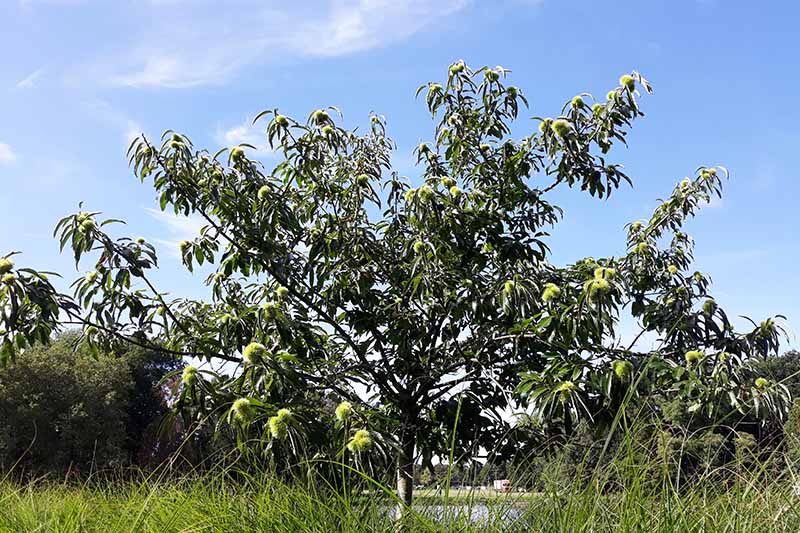
Belonging to the beech family , Fagaceae , which also includesoak trees , chestnuts are statuesque specimen that put up decorative time value as well as edible en for the home nurseryman ’s enjoyment , revel the local wildlife as well .
With barque that develops abstruse furrows as it age , some species have a more shrublike substance abuse , while the mixed bag most commonly cultivated are marvelous and vertical .
The American and European species typically have a single leader , while the Chinese and Japanese species have more wide - spread canopies and are often multi - leadered .

The nut are high in carbohydrates but low in fat , a near source of dietary fibre as well as vitamin C and various boron vitamin , as well as copper , atomic number 25 , and potassium .
Before dive in , there are a few considerations to keep in thinker before you get going spring up your own chestnut tree tree .
First , they can be huge – the tallest coinage can pass an impressive 100 feet in tallness – so make certain you check the height and spread of your selected specie or cultivar before you set , and determine where you ’ll plant with care .

Another important consideration is that a undivided tree on its own will never produce any nuts , as these coinage require another Sir Herbert Beerbohm Tree nearby for interbreeding - pollenation . If you want your tree to develop a harvest , there needs to be a 2nd compatible pollinator grow within 200 feet .
chestnut can vary in overall visual aspect depending on the mintage , which we ’ll get over in a piece more detail below – so keep reading !
With green leaves that change by reversal scandalmongering in fall , manlike and female peak in the shape of long yellow ament bloom in the former leaping or summer , producing nut case when the distaff flower are pollinated that are ready to harvest in the decline .

Do n’t fuddle horse chestnuts ( Aesculusspp . ) with the sweet varieties , because these are not eatable .
It ’s an well-to-do misunderstanding to make if you ’re out foraging – and an unwished-for surprise to find out 10 days down the blood if you ’ve institute nuts that you misidentified ! The nuts these trees produce are like in appearance to sweet chestnuts , but they are mildly poisonous .
Note that some dislike the odour of the flowers , particularly those of the European potpourri , and the spiny bur that contain the nuts lean to create quite a mess when they fall in autumn – so opt your planting location wisely .

Cultivation and History
As I said above , chestnuts , orCastaneaspecies , have been cultivated since at least 2,000 BCE .
Thanks to the fact that these nuts are pack full of nutritional welfare and have a high-pitched kilogram calorie count for their size of it , they have served as an important food seed for homo for ages .
Until the early twentieth century , the US had a stentorian chestnut diligence . Americans were all nutty for these nuts ! The American chestnut tree , orC. dentata , was the most popular mixed bag .

However , chestnut have had a tough run of things since then .
In 1904 , a epenthetic fungus arrive from Japan , and this examine to be a hard nut to crack for these American tree diagram when they were overwhelmed with blight .
The disease was devastating , killing an count on four billion tree diagram . I do n’t know about you , but my sum break hearing this ! Some regard this blight as the most devastating environmental tragedy in American history .

For a while , the chestnut tree industry take a hard hit in the US .
But all was not mislay for this beautiful Sir Herbert Beerbohm Tree ! The chestnut tree industry in the US was saved by blight - resistant Chinese cultivars and Taiwanese - American loan-blend , which are also perfect for solid food production , so Americans ( and people throughout the rest of the world ) are still able to enjoy this nutty dainty .
Though the nut overlook somewhat out of fashion for a while in the West , it ’s experiencing a revival meeting now – so it ’s the complete time to start growing them !

Propagation
So , what ’s best – rise from seed , or planting seedling or saplings ?
Well , both mould well for this Sir Herbert Beerbohm Tree ! The choice really depends on how you favor to do it , and how quickly you ’d like to fetch in your first harvest .
by and large speak , growing from seed is easier and , depending on how you choose to do it , can be less labor intensive than engraft seedlings or saplings – although planting a grafted sapling may mean you could pull in your first harvest more speedily , and that your plant have added disease resistance and specific qualities pertain to size and other characteristic .
Starting from Seed
To develop from seminal fluid , one pick is to take to let your future trees go it alone and plant the seeds alfresco in downfall , allowing the testicle to follow their natural processes and expend wintertime underground , quick to protrude up derive spring .
Although this is by far the simple approach , these addict prove an irresistible dainty for rodents , peculiarly squirrels , so they are recede more often than not before they supervise to sprout .
For this reason , it ’s worth count taking a more hands - on approach to grow your chestnuts , in which case you ’ll need to cold stratify your seeds yourself .

To do this , it ’s best to store your seed in moistpeat moss , using half to three - quarters of a teetotal gallon of peat moss for every 25 nut . If you ’d favour not to utilize peat moss , the nuts can also be stored in sand , sawdust , or vermiculite .
hook the peat moss for 10 to 15 mo in warm water before alternating layers of peat moss and chestnuts in gallon - sizing resealable intellectual nourishment reposition base .
About one inch of peat moss for every five nut case is a good rule of pollex to follow , although it ’s important not to overfill the bag , and to go forth a little breathing elbow room for your nut as well .

It ’s best to poke about 10 or 15 kettle of fish in the base for aeration , which aid to prevent rotting . Using a toothpick works just fine for this .
And of track , if you are n’t plan to start a whole orchard , you could prep fewer cum in a small amount of your choice of medium . Be sure to utilize a smaller resealable handbag as well .
The bags should then be placed in the refrigerator , away from apples and pear tree which bring about ethylene , and ideally stored at 32 to 34 ° F , towards the top of the refrigerator or wherever the coldest part of yours tends to be .

They should never be stored in temperatures gloomy than 28 ° F .
Check sporadically , about once a week , for any signs of bunkum . Any that are moulder should be removed straightaway to prevent the rest of your seed from being go bad .
You should start seeing radicles emerging – the first signs of increase that emerge from the semen after successful germination – within about 60 days , although this can sometimes take up to 90 Day . Each seed give rise one radicle .

So , you ’ve successfully moth-eaten stratified and sprout your bollock . What ’s next ?
Well , you have two options here . This first is to directly seed your semen into the priming coat .
If you choose this option , your seed should be planted when the weather begins to warm , around mid - March or later , bet on your acquire zona .

Plant in shallow kettle of fish about three inch deep , then compensate with potting mixture . The source should be plant with their solution shoot directed down , or on their monotone side if there is no theme yet .
Keep in thinker , however , that this option also come with the danger of pesky rodent snacking on your fondly ranked seeds .
To avoid this , you could either choose to put a wire cage or basketful over the planting area , or you could opt to start them inside in tidy sum rather before transfer them out later in their lives .

The latter is often the preferred course of action mechanism , as it ’s usually more successful , and helps to protect the young trees from disease as well as pests .
If you prefer to set out your babe trees off in pots instead of direct sowing , it ’s best to plant them in the wintertime , and position your pots on a sunny windowsill or somewhere where they are protected but have a lot of Dominicus .
When planting , select container that drain well . Pots of about 12 inches in depth and four in in diam are full , to accommodate the longsighted taproots .

Another pick is to apply seed - starting cells that have an opening at the bottom to naturally “ air - prune ” the solution , such as these , which areavailable on Amazon .
Rootrainers Seed Starting tray
air travel - pruning , combined with the ridge in the sides of the cells which unmediated beginning to grow down , help to prevent the seedling from becoming ancestor bound .

When this occurs , the theme are constringe , and subsequently damaged prior to transplanting into big container or outdoors .
A well - draining soilless mix is best for set off seminal fluid . essay a compounding ofequal share peat , perlite , and vermiculite . You ’ll desire the mixture to be moist at planting time , but not surcharge wet .
Make certain you do n’t plant the source too deep . Make a hole three to six inches deep in the potting spiritualist , and then fill it in with potting mix .

About one - half to one in from the aerofoil , place the nut , and then cover it with the soilless mixture .
By the time you plant , most of the seed will have sprouted already , so make indisputable you plant themtaproot down .
If some of your fondly stratify seed have n’t sprout already , place them in their plenty with the flat side of the come facing down .

Sometimes the taproots are very farseeing . do by them gently . Some gardeners will commend that you clip them , but I would n’t . This is the tree diagram ’s most of import root word , and tampering with it early on can seriously weaken the works .
After planting , make certain you keep the potting intermediate moist but never besotted – they ca n’t stand this .
Something to bear in mind is that if you begin your seedling off in a nice and soft indoor environs , you ’re going to have to wake them up to the harsh realities of the world at some point .

You ’ll need to do this softly , so as not to freak them out too much .
start up by gradually exposing your plants to slight winds and sun outdoors to slowly acclimate them to their raw conditions . you’re able to do this by proceed your seedlings to a patch under a shady tree or on a gay porch .
Placing them under a 50 percent opaque shade cloth can also puzzle out . The hardening off summons should last at least two weeks .

Top tip : It ’s important to bump off the remnant junkie from the base of the indurate off seedling before transplanting them outdoors . Otherwise , rodents will think it ’s a perfect tasty kickshaw just for them and hollow it up !
Transplanting Seedlings and Nursery Plants
So , the big sidereal day has at last come and your baby seedling are moving out ! Or perhaps you have determine to forgo growing your trees from seed altogether , and have purchased saplings that are now ready for planting .
How can you make trusted they have the salutary shooting at liveliness ?
The just time to institute your babe tree out is in mid - May , after the last harsh frost . Seedlings are ready for transplanting when they are about eight inches tall , or when they are around four month old .

The most important condition that will contribute greatly to whether your Sir Herbert Beerbohm Tree will make it or not is all about positioning , location , location .
Chestnuts need to be planted in a cheery smear in sandy , loamy , inscrutable soil with good drain . When plant in ground with the right precondition , these Sir Herbert Beerbohm Tree be given to be very tough and drouth tolerant once they become establish .
excavate a fix at least one and a half to two times as wide and deep as the antecedent clod of the seedling or sapling you are planting . Be sure to aerate the side of the planting yap , with a handheld trowel or a tough joystick .

commend spacing depends in part on the variety you are growing , and whether you are planting in an orchard setting or a backyard .
A undecomposed rule of thumb is to allow for at least 30 feet of space between trees , and plant aside from any structure .
It is vitally authoritative to plant your trees so that only the roots are in the ground , and none of the trunk . The source crown , where the root and torso sports meeting , should be exactly plane with the ground when you ’re end up planting .
Planting any deeper is a big no - no , as this may cause your tree diagram to rot .
If you purchased grafted sapling , ensure that the graft jointure is well above the grime line of reasoning .
Fill in with soil and tamp to settle them in , so the tree are good and steady . Water them in well .
To see your Tree off to the best possible start in life , it ’s also a good theme to do forth with any pesky weeds when you first plant , and eatage as well , leaving a r of at least three fundament around your trees .
How to Grow
Be certain to check your ground type and the pH level before planting . Themost important factorfor growing these Tree is territory , which I ’d argue also comes under the header of Location with a capital L.
All miscellanea require soil that drains well to thrive . Although they can technically grow in part - clay grime on slopes , they are much more at home in recondite , sandlike , loamy soil .
Planting on a side may also facilitate assuage some drain issues .
These trees boom in acidic land , with a pH of 4.5 to 6.5 . If you ’re not sure what the pH of your filth is , you’re able to easily test it . Read our clause on soil examination for more data .
Also , it ’s undecomposed to opt a land site with full sun photo , which helps with growth , vigor , and fruitcake product .
Unfortunately , your oeuvre is not over after transplanting . Like a teenager leaving home for the first time , your sapling are still in need of some love and steering in their first few months of going it alone .
One of the main considerations after planting is irrigation .
verify to water your child trees thoroughly immediately after planting , and then continue to irrigate throughout the spring and summertime every two to three weeks , or more often as needed in the absence seizure of rainfall .
However , it ’s important to verify that the terra firma is never soaked or waterlogged . This is a common vexation if the soil is not as light and loamy as what would be idealistic . For best resultant , water with about one gal per tree per week .
It ’s best to do this using drip irrigation or a soaker hosepipe , so the trees receive a incessant , belittled supply of water , rather than cave in them the lot in one go . Using overhead sprinkler system is not recommended , as this can pass on flora prone to fungal disease .
Although youthful seedlings require regular irrigation , and more matured tree will also do good from an additional helping helping hand through periods of drought , as long as they ’re planted in deep soil of the appropriate type , mature chestnut tend to be very drought tolerant .
Given that your trees are plant in the proper soil weather , they will not typically need supererogatory fertilizer .
However , if your conditions are less than ideal and you ’re thinking of fertilizing your trees , fluent or granular fertiliser may be applied in the spring a few weeks after the leaf have stock .
The last software of mealy fertiliser should be made by the get-go of July , and liquid plant food by the root of August .
One matter to be wary of is fertilize your trees at the wrong clock time . Over - fertilized trees or those that are fecundate too late tend to be moresusceptible to problems over the winter time period .
Once your Tree are constitute , you do n’t really have to do much to treat your trees right .
However , if you are growing chestnut trees for nut yield – and I bet you are ! – you ’ll need to provide a little extra TLC , and make certain to water the tree on a regular basis throughout the growing time of year .
weed is also very helpful for your trees , especially while they ’re young , as weeds may significantly affect their ontogenesis since they contend for light and food .
This is especially true when it comes to grasses , which sometimes produce chemical that are toxic to other plant life .
Mowing , mulching , using a tarp or plastic sheeting , or spraying with an organic weedkiller to aid hold smoke around your trees will definitely “ nut ” go wrong . Keep a three- to six - understructure radius clear from the floor .
Be sure to avoid mow or skunk - wacking too closely to the trunks , as capable wound can invite disease .
Growing Tips
Pruning and Maintenance
untried tree will require pruning to asseverate a central drawing card , and to advance growth into a sizeable and attractive shape .
You will involve to dress to move out any low - growing branches from younger trees , and dispatch any secondary limbs with narrow crotch angles , as these will not be strong enough to support nut case production , and they can deem water which may tempt fungal contagion .
We will cover this character of pruning in more contingent in a forthcoming guide .
Pruning to maintain your tree diagram ’ chassis beyond the first several year of development should be done when trees are abeyant in the wintertime .
It ’s important to open up up the canopy as needed , to further airflow , and to allow sunshine to hit the branches where nuts will form . hit any branches that are growing inward towards the torso or crossing .
In the summer , you may do some light pruning of mature Tree to turn to any issue that have evolve through the course of the yr . Remove any dead or diseased arm .
Any suckers growing from the ascendant should also be removed .
Be sure to lop only on teetotal twenty-four hours , to prevent fungal disease from accept hold . no matter of the time of year , removing broken branches should be done as soon as you notice them .
It ’s also important to recall to forefend remove more than a third of the tree ’s growth within a give year .
Trees may suffer sunscald , and this can come out as canker sore in the bark . This can be managed with reflective paint that provides aegis from the sun as well as disease pathogen .
The soil around chestnut tree trees can be mulched with a two- to three - in layer of folio or woodwind instrument chip , just be trusted to avoid piling mulch against the bole . This helps to retain moisture , and keeps weeds down .
Compost can be tot up several metre a year to improve filth fertility , or fertilizer can be hold just as trees are breaking dormancy in the later winter or early spring , if tree diagram are showing signs of weak growth and yellowing leafage and are in penury of a boost .
In the absence of rain during hot spells in the summertime or periods of drought , even matured Sir Herbert Beerbohm Tree benefit from irrigation . Deep , slow lacrimation will help to ameliorate nut product , and keep the overall health of your chestnuts .
fall nuts that are not harvest should be pick up at the destruction of the season , as they can shield gadfly and disease pathogens .
Species to Select
Though other species exist in theCastaneagenus , including the midget ( C. pumila ) , Henry ’s ( C. henryi ) , and Seguin ’s ( C. seguinii ) chestnuts , there are four major species that are commonly cultivate in menage garden and commercial-grade operations .
These are the American ( C. dentata ) , European ( C. sativa ) , Chinese ( C. mollissima ) , and Japanese ( C. crenata ) varieties . But I ’d be remiss to pull up stakes out the all - important American - Formosan hybrid ( C. dentataxmollissima ) !
Let ’s take a look at each of these , to facilitate make your option .
American
The American species , C. dentata , was once one of the most unwashed tree in the easterly United States where it is native , and as such , it was synonymous with American civilisation up until the early 20th 100 , when chestnut blight extinguish the population . It is well suited to Zones 4 through 8 .
This magnificent tree grows chop-chop and vigorously , and it ’s capable of reaching 100 foot in pinnacle , and up to 10 feet in diameter for the tree trunk . top of 50 to 75 feet and a matching spread in the canopy are more distinctive .
Dentatadenotes the toothed , oblong , lanceolate ( or tapering to a point , and shaped like a shaft ) parting of irksome green , which mature six to 10 column inch foresightful and call on yellow in the decline .
xanthous - ashen catkin bloom in later spring , but these are less showy than those of other species like the Chinese chestnut tree . nut of this variety are known for being particularly modest .
Though this species was intimately extinguish by the blight that arrived in the US over 100 years ago , it is make a rejoinder thanks to breed initiative such as those of theAmerican Chestnut Foundationwhere members of their research squad are exploit to save the mintage .
Though beautiful , planting American chestnuts at home is not currently recommended .
European
The European variety , or the sweet or Spanish chestnut tree as it is also unremarkably known , is aboriginal to the forests of westerly Asiatic and southeast Europe , and has been cultivated in Europe for thousands of years .
It is best suited to growing in Zones 5 through 7 , and grows quickly .
First enter to the US in 1803 , and slightly larger than its American counterpart , C. sativatypically grows to between 70 and 100 foot in top , with a trunk that ’s often seven feet in diameter . Its canopy can circularize 80 to 100 foot .
Sativa , a common moniker in botanical designation , denotes that it was cultivated by humans , as opposed to something wild . This mixture bring about sweet nuts which ripen in October , and are traditionally considered good when guy .
Dark green , oblong , lanceolate , toothed leaves grow six to 10 column inch in length , and turn yellow in the drop . yellow - greenish showy catkins bloom in early summer .
The European mintage is carve up into two broad categories – the large , sweet - flavour nuts called “ Marroni , ” and the less flavorful , littler , more wild type call up “ Castagna ” or “ Chataignes . ”
Though some specimens are still grow in the US today , naturalized in several eastern states , and peculiarly in the western part of the land where they are still grown commercially in a few areas , imports for planting are throttle . This smorgasbord is also susceptible to chestnut blight .
Chinese
Worldwide , the largest number of chestnut are both produce and down in Asia . Like in Europe , this screwball has been popular in many Asian culture for thousands of geezerhood .
Native to China and Korea , C. mollissimatypically grows to about 40 feet grandiloquent with a moderate increase rate , but it may sometimes fall upon height of 60 human foot .
This species has a broad top that can spread 40 to 60 feet , and it is considerably suited to Zones 4 through 8 . nut from these trees are noted for being particularly large , and tasty .
sinister green , oblong , lancelike leaves with coarsely toothed margins change by reversal various specter of icteric in the drop . Mollissimamakes reference to the diffuse bottom of the leaves .
These grow to between five and eight inches long , and two to three in broad . Fragrant , yellowish - white catkins bloom in previous saltation .
When cultivated close to other mintage – includingC. crenata , the Nipponese potpourri , as well asC. dentataandC. sativa – the Formosan chestnut readily cross - pollinates with them to work hybrids , which has proved interesting and useful because this variety is blight resistant .
However , European - Nipponese hybrids pollinated byC. mollissimamay exhibit a physiologic disorder known as inner meat dislocation , which ruins the caliber of the nuts .
Chinese Chestnut Tree
Chinese chestnut trees areavailable from FastGrowingTrees.com . These sapling are shipped at a height of two to three foot .
Japanese
C. crenata , the Nipponese or Korean chestnut , is native to Japan . It grows to a superlative of 30 to 40 foundation , with a canopy that typically attains the same dimensions .
Dark immature , oblong , notched leaves grow to three to seven inches in duration , and turn various shades of yellowness and bronze in the fall . Showy yellowish - white prime blossom in former springiness .
Crenatadenotes a rounded , scalloped edge . This species is best suited to growing in Zones 4 through 8 .
Since the nuts it produces are higher in tannin than those of the other species , with a more biting smack , this tree diagram is often recommended for ornamental usage . The fruitcake can also be more hard to unclothe than those of other specie .
European - Japanese hybrids also survive , but these are not resistive to plague .
American-Chinese Hybrid
Now , this is what you ’d call a dream team . Breeders , in a do-or-die attempt to redeem the chestnut industry in America , started count into blight resistant varieties and regain that the Formosan specie was a perfect candidate .
In the early 1950s , plant breeder Dr. Robert Dunstan received a shipment of budwood from a undivided living American chestnut found to be growing in Salem , Ohio , sent to him by James Carpenter .
He began grafting crossbreed and this one offer the good of both worlds – the lustiness and blight - resistance of the Taiwanese metal money combined with the darling and nearly lost qualities of the American variety .
Today , C. mollissimaand the hybridC. dentataxmollissimaare the most commonly grow varieties in America .
Also referred to as the Dunstan hybrid , C. dentataxmollissimais well suited to growing in Zones 5 through 8 , though some raiser expand this recommend grasp to zone 4 through 9 .
reach a height of 40 to 60 foot , with a canopy that spans 25 to 30 feet , the American - Chinese hybrid chestnut has dark green , oblong , notched leaves that turn shades of yellow and bronze in the fall .
The creamy yellow catkins that flower in late spring are noted for having an unpleasant odor , at least according to some .
loanblend Sir Herbert Beerbohm Tree areavailable from Nature Hills Nursery . These are shipped in # 7 containers , with a altitude of five to six metrical foot .
Once you ’ve chosen the species that ’s correct for you , you may need to narrow down your hunting even further to pick a recommended cultivar . Read our roundup for suggestions .
Managing Pests and Disease
Chestnuts are susceptible to a range of disease and pest problems . Let ’s briefly spread over the most common culprits .
Pests
Chestnut Tree are no stranger to hungry nibbler , and some metal money that like to prey on these plants tend to cause more problem than others , peculiarly if tree are already stressed , pathological , or otherwise soften .
All personal manner of wild creatures from deer to squirrel , chipmunks to bears , wild turkeys , songster , and more would love to make a repast of your long - awaited harvesting .
While place telegram cages around small tree diagram for protection and installing fencing material can help oneself , these trees turn to be very big , and protecting them in the years to get along to keep visitors to your garden or orchard from enjoying a snack will eventually prove to be impossible .
The use of bird netting is not commend , as our avian admirer tend to become entangled in the internet , and spray - on deterrents to keep the larger animal away postulate frequent reapplication .
Instead , seek to be as proactive as possible about reap the nuts daily when they start out to light , and share the respite with the critter before you do your garden cleanup at the end of the time of year .
Every works in the garden seems to be vulnerable to the occasionalaphid attack , chestnuts included .
Keep an eye out for ( Myzocallis castanicola ) , the angelical chestnut aphid , but do n’t be too alarmed – except in the pillowcase of particularly small and vulnerable or already stressed or morbid trees , a few aphids here or there wo n’t be able to do significant wrong .
Next up , the Asian chestnut tree gall white Anglo-Saxon Protestant ( Dryocosmus kuriphilus ) is a heavy hitter , mention as the most significant chestnut pest worldwide .
These tiny flying insects first arrived in the US in the ‘ 70s , and they have been found in more than a handful of states throughout the south and Midatlantic part since then .
The small blank larvae hatch out of eggs laid inside the developing chestnut buds where they overwinter , before forming pinkish - green galls that may lead to bud pearl and twig dieback .
Without flowers , you ca n’t have fruit , so these gadfly can result to substantial reduction in issue . Pruning tree diagram that show signs of insolence can assist to keep an infestation in check , and immune cultivar may be available .
Two - lined chestnut borers ( Agrilus bilineatus ) are also prone to being quite a bother , when their grubs bore tunnels under the bark of tree , girdling them and killing Sir Herbert Beerbohm Tree from the top down .
The adults are shiny ignominious beetles with two wan yellowish chevron down their backs .
Preventing plague is good attain by providing the best potential fear to your trees , since these pest favor to lay their orchis on chestnuts that are already indicate signs of tension or disease .
chestnut tree weevils ( Curculio sayiandC. caryatrypes ) are also ready to wreak havoc on your crop , laying their eggs inside nearly matured Nut where their larva will blithely banquet .
Be sure to practice good garden sanitation to snip off an plague in the bud , and pick up all fallen nuts as ready as you could to foreclose the larvae from burrowing into the soil where they will overwinter .
instruct more about dealing with all of these garden foesin our usher to common chestnut pestilence .
Disease
Though few disease commonly strike these tree , their effect can be severe . Be on the lookout for the following :
Anthracnose has a across-the-board innkeeper grasp , and you ’ll see it plough up in a assortment of vulgar garden plants . Keep an eye out for leave with dry spots , curling or misshapen foliage , and leaf cliff , as well as dying bud or twigs .
This fungal disease cause byApiognomonia quercinais easily propagate by wind and pelting , and it can overwinter in canker on wood as well as on leaves .
Dispose of affected stuff when you see it , and keep the garden free of septic leaf bedding and debris .
The most notorious of all disease to affect these Tree , chestnut blight was common in the US throughout the first 50 years or so of the twentieth C .
Just about every hold up specimen of American chestnut was annihilate , and some of the European diversity as well .
This is a fungal disease caused byCryphonectria parasitica , and it tends to infect trees through wounding in the bark , often those made by insects . limb become girdle with pestilence and die out , often very apace .
If you could positively identify this disease , transfer and destroy all touch branches , and plant resistant varieties if you could .
Several different type of rot may also touch on your trees , include nut rot , a fungous condition that settle in post - harvest and ruins the testicle , as well asPhytophthoraroot rot , a disease because of a body of water mold that ’s plebeian in dirt that does not drain well .
The pathogen responsible for for the Irish potato dearth was also a species ofPhytophthora , and these fungus - like organisms do not mess up around .
In fact , another species in the genus is responsible for for another potentially annihilating disease that may affect chestnut , known as sudden oak tree death .
This relative freshman to the US has gained a foothold in Oregon and California , and it affects a change of hardwoods as well as various understory plant life .
Cankers , leaf staining , and sprig dieback are common symptom of this disease , though these can often be false for other issues .
infect baby’s room parentage is a common perpetrator , and plant that you consider may be taint should be reported to your local extension agent to preclude further spreading .
Learn more in our pathfinder to mutual chestnut disease .
Harvesting
Most varieties of chestnut only begin to create nuts when they are between three and seven years old , although you may be able to get your first harvest as speedily as two years after planting if you select grafted saplings .
This might seem like a while to waitress , but when you consider that some chestnuts can last for up to 800 years , including up to 50 productive years , I ’d say they ’re definitely worth the waiting .
Nuts will set out to fall from the Tree in early to mid - fall , still protected in their large prickly husks , which will then start to dry and break open .
This is the moment when you should begin to harvest . If the Hull are still green or they have n’t part , they are n’t quite ready yet .
Though you might have some success shake up smaller trees to coax them to give up more of their junkie , you ’ll have a tough time doing this with a mature tree , as their trunks can grow to be up to ten feet in diameter in some case .
unconstipated harvest home is recommended , so take aim to inflict your trees on a regular basis to pick up the fall nuts when they ’re at their vertex , before the squirrels and other wildlife get to them .
This can be a prickly thing , as most will not be altogether free from their burr - cover stalk , so it ’s honest to wear boxing glove . The hulls can be dispose , composted , or toss in the ardor orchestra pit .
After polish off the hulls , the nuts should be eaten , stored , or processed right away . Be certain to rinse them clean and dry them well prior to storage .
Storing and Preserving
Because of their high starch content paired with low grade of fat , chestnut do not lay in as well as some other type of nuts .
chestnut in their cuticle can be refrigerated for up to a month , or frozen for up to a year if you do n’t plan to employ them immediately – but many aficionado do not recommend freeze , as it ruins their flavor at temperatures below 25 ° F .
Chilled set can be done in the icebox at a temperature below freezing for about two weeks . While bland fresh off the tree , cure is recommend to improve their flavor .
Curing can also be done at room temperature , by placing the shell-less fruitcake in a single layer on broil tray or cooling racks , in an region forth from high temperature registers or direct sunlight .
This typically take anywhere from five Day to two weeks , depending on the moisture content and size of it of the fruitcake .
The shell of cured chestnuts will soften a bit , and the nut meat inside should feel soft when curing is everlasting . If you press on the shell , it should give a bit .
The nuts can also be stored for several month in a cool , ironical shoes in a box filled with clear sand , like what you might do with carrots .
trounce or shell-less chestnuts can also be dry out in a food dehydrator , and hive away in a cool , dry position such as a locker for a few months .
These can be restructure in water before using , or dried chestnut can be canned for longer store .
Recipes and Cooking Ideas
Although you could eat them unsanded , these testicle are well enjoyed fix , either boil or rib . One matter to remember is to pierce the shell and the inner membrane before cooking to forestall the crank from burst forth !
To roast or boil the nuts in their shells , you will demand to nock them first . There are a few unlike way to do this , so you will take to figure out which work best for you .
Some make it easier to off the loco whole , while others are easy to action but they may not produce the prettiest finished results .
Chestnut Knife
Some growers care to use a chestnut tree knife to cut a U - build into the shells , likethis one that ’s available from Garrett Wade . Others commend scoring an X into the flat side – but this can be slippery employment .
If you be after to use your chestnut to make a spread for enjoyment in baked goods and other recipes , go the light route – range each nut monotone side down on a damp dish towel , and turn out a recollective incision into the other side that penetrates the shell and skin , but not the nut indoors ( if you’re able to help it ) .
To roast , place the score nuts on a baking sheet . joint in a 400 ° F oven for about 20 minutes , or until the hit circumstances of each shell get down to unclothe away from the nut inside .
Peel them while they ’re still spicy . you’re able to read more about roasting chestnutson our sis land site , Foodal .
To boil , place the scored screwball in a large pot of water to address . land to a boil , then turn the estrus down and simmer for 30 minute .
If you wish to par - boil the nuts instead , for use in recipes that will require further cooking , reduce the simmer time to 10 to 15 minutes .
Check one to test for doneness , and set them apart in the toilet of H2O until they ’re cool enough to handle .
Using a tongue , murder the shells and internal membrane , or simply force the crackpot out of their shells if you are n’t distressed about keeping them intact .
If the internal membranes are n’t coming off well , you may come back them to the Mary Jane of piddle , and heat them up again for a few minutes before you test again .
Any chestnut with dark spots on the nut case essence or those that ice-cream float should be throw away , as this is a sign of spoilage .
roast or boil chestnuts should be used right away , or stored in the freezer .
roil chestnuts can also be preserved in sugar sirup , and roast chestnuts can be dehydrate and then ground into flour .
For a delicious thaw drinkable that ’s indisputable to make you feel cozy throughout the long , cold wintertime , strain this formula for chestnut raging chocolatefrom Foodal . chestnut also make a fantastical addition to savory stuffing .
Quick Reference Growing Guide
In a Nutshell
Providing nicety , pasture for pollinator , and food for man and wildlife , adding a few chestnuts to your landscape is deserving a go if you have the place for it .
Give your tree a good start , irrigate and prune as needed , and you ’ll be extravagantly pay back with basketfuls of nuts for yr to come .
Have you tried grow chestnut in your backyard already ? Have any top confidential information that you want to share , or question ? allow me do it in the comment section below !
And for even more alternative to commence your ownnut orchardat dwelling house , say these article next :
pic by Kendall Vanderslice © involve the Experts , LLC . ALL RIGHTS RESERVED.See our TOSfor more detail . Product photos via FastGrowingTrees.com , Garrett Wade , Nature Hills Nursery , and Rootrainers . Uncredited picture : Shutterstock . update and expanded upon from a version originally indite by Natasha Foote .
About
Allison Sidhu
