Sumac bush are fall showstoppers with high wildlife value .
Sumac shrubs provide intriguing visuals throughout the year , whether grow along roadsides or constitute as garden accent . In spring , they bring about large blossom clump , which are followed by brilliantly coloredfall foliagein orange , fire red , and Burgundy wine . The bloom clusters bring about berrylike stone fruit that turn red in autumn and last well into winter , where they dish out astasty snacksfor wildlife .
Where to Plant Sumac
Sumac is extremely versatile ; it can grow in any type of well - drained soil , even dry out to coarse soil that is slightly acidic to neutral ( pH 6.5 to 7.0 ) . you could plant it in full sun orpartial wraith , but it will uprise taller in full sun . When selecting a planting location , keep in brain that sumach propagate easy , typically organize a dense brushwood of increment via underground rhizomes . turgid species , especially , may be difficult to control .
How and When to Plant Sumac
Plant sumac in the leaping , so it has the whole grow season to get established . fag a holeas deep as the etymon ball and at least double as wide . position the shrub in the hole and backfill with the original soil so the top origin are level or slightly above the soil Earth’s surface . Tamp down the territory and water it tardily and profoundly . mulch around the soil retains soil moisture andsuppresses widow’s weeds . Spacing depends on potpourri , so refer your industrial plant tag before take a site for multiple industrial plant .
Sumac Care Tips
Light
works sumac in full Dominicus . Some species tolerate part shade , but limited pic to sunshine may lead to looser plant habits and muted coloring . Golden - leaf cultivars such as ' Tiger middle ' ( staghorn sumac ) need shelter from the afternoon sun to foreclose folio burn . If this plant grows in full Dominicus , its brightly one-sided foliation may show evidence of bleaching .
Soil and Water
Gardeners often pick out sumac because it tolerates a wide range of soil type — as long as they are notpoorly drain . Saturated soil may take to stem rot . you may find if you have well - enfeeble soil by digging a 12- to 18 - in fix and satiate it with pee . After it drains completely , refill it with body of water again . Well - draining soil should enfeeble about 1 inch per hour .
Like most plants , sumac is glad with about an column inch of water per week , especially during its first year in your garden . Once established , sumac will usually find natural rain sufficient . However , potted sumac will require lachrymation more frequently .
Temperature and Humidity
The cold - hardiness of shumac depends on the miscellanea and its native home ground . Smooth sumac and staghorn sumac are both hard shrubs that can be grown as low as inZone 3 , whereas lemonade berry sumac want a milder climate . All sumach are well - adapted to humid conditions .
Fertilizer
Sumac does not require fertiliser and can even originate in inadequate soil . The only exclusion is pot sumac . Due to frequent lacrimation , the nutrients wash out and need to be replenish . During the growing season , feed the plant about once a month with a gross fertilizer stretch to half the enduringness .
Pruning
Sumac does not require snip to shape it ; just transfer any utter , give-up the ghost , or pathological branches in the early bound . Alsocut off any unwanted suckersas soon as they come forth .
Potting and Repotting Sumac
Most sumacs are too magniloquent for container planting , with the elision of ‘ Tiger middle ’ , a staghorn sumach mixture that only grows 6 to 8 foot marvelous and blanket and spreads slowly . The pot should have a capacity of at least 7 gal and big drain holes . fill up it with well - drain potting land and H2O it regularly ( unlike sumac in the landscape , potted plant life dry out fast and necessitate watering ) .
Pests and Problems
When get in its aboriginal habitat , sumach is generally not affected by serious disease , but it can get leafage smirch , powdery mildew , cankers , and armillaria root rot . Insects that feed on sumach admit aphids , black ordered series , and psyllids ( plant sucking louse ) .
How to Propagate Sumac
The comfortable way to propagate shumac is cuttings . Take a 6 - inch cut and dip the cutting off end inrooting internal secretion powder . Insert it about halfway into a 4 - column inch pot fill up with moist potting mix . Keep the cutting moist in a middling affectionate , not hot , location aside from acute sunlight . When you see new growth , tooth root have formed . Wait for the sapling to spring up into a vigorous plant with the root fill up the whole pot before transfer it into the landscape .
Types of Sumac
Because sumac comes in a wide kind of shapes and sizes , it makes a great companion plant life in the garden . Selections range from low - growing spreading types that work as underplantings for tumid , low - maintenance expanse to large plants that create garden focal point . Most varieties display fernlike compound foliage that turn the plant life into lightly textured landscape accent mark .
All sumac variety bloom , although the littler ones deport unimportant flowers . Larger varieties make up for the small bloom size by displaying big white clusters ofpetals loved by pollinator . After the flower fade , they form clusters of brightly colourise hazy scarlet fruit phone drupe . But the real show does n’t commence until fall when sumac ’s leafage showing cover hillsides in glowing tonus of orange , carmine , burgundy , and gold .
Cutleaf Staghorn Sumac
Rhus typhina’Laciniata ' bring thefall gardento life story with its striking fall foliage in shadiness of cherry , orange , and amber . During the rest of the grow time of year , its profoundly dissected foliage gives this large shrub a fernlike appearance . plant grow 10 - 12 foot tall and wide , sending up suckers from the stem to develop large colonies if leave uncurbed . zone 3 - 8 .
‘Prairie Flame’ Sumac
Rhus copallina latifolia’Prairie Flame ' is a midget choice of shining sumac introduced by Morton Arboretum . It produce just 5 - 7 invertebrate foot grandiloquent and 6 - 10 feet encompassing . Prairie Flame is a male person clone , so it develop panicles of lily-livered - green flowers in summertime but does not fruit . The glossy dark-green folio turn imperial - bolshy to orange in autumn . zona 4 - 9 .
Fragrant Sumac
Rhus aromaticais a species native to North America that form a dense , low - mature colony ideal as a groundcover or low hedge . The shiny dark-green foliage turns bright red - purple in fall . It grows 5 feet tall and 10 foot wide . Zones 3 - 9 .
‘Gro-Low’ Sumac
Rhus aromatica’Gro - Low ' makes for a great groundcover . It has shiny gullible foliage ( that looks likepoison ivy ) and bunch of red berries in fall and winter . It get 2 feet tall and 8 metrical foot wide of the mark . Zones 3 - 9 .
Shining Sumac
Rhus copallinais also known as winged sumac because its glossy chemical compound leaves have a offstage along the central leaf venous blood vessel . It can become a great shrub or small tree 10 - 20 feet tall and 10 - 12 feet wide . Like most other sumacs , it has fantabulous fall color and spreads by underground rhizomes , but it is less aggressive than smooth sumac . Zones 4 - 9 .
Smooth Sumac
Rhus glabrais a North American native bush that suffer dark green foliation and bunch of fuzzy , rusting - blood-red fruits in fall . The leaves turn bright shades of red and orange in autumn . It grows 15 feet tall and all-embracing . Zones 3 - 8 .
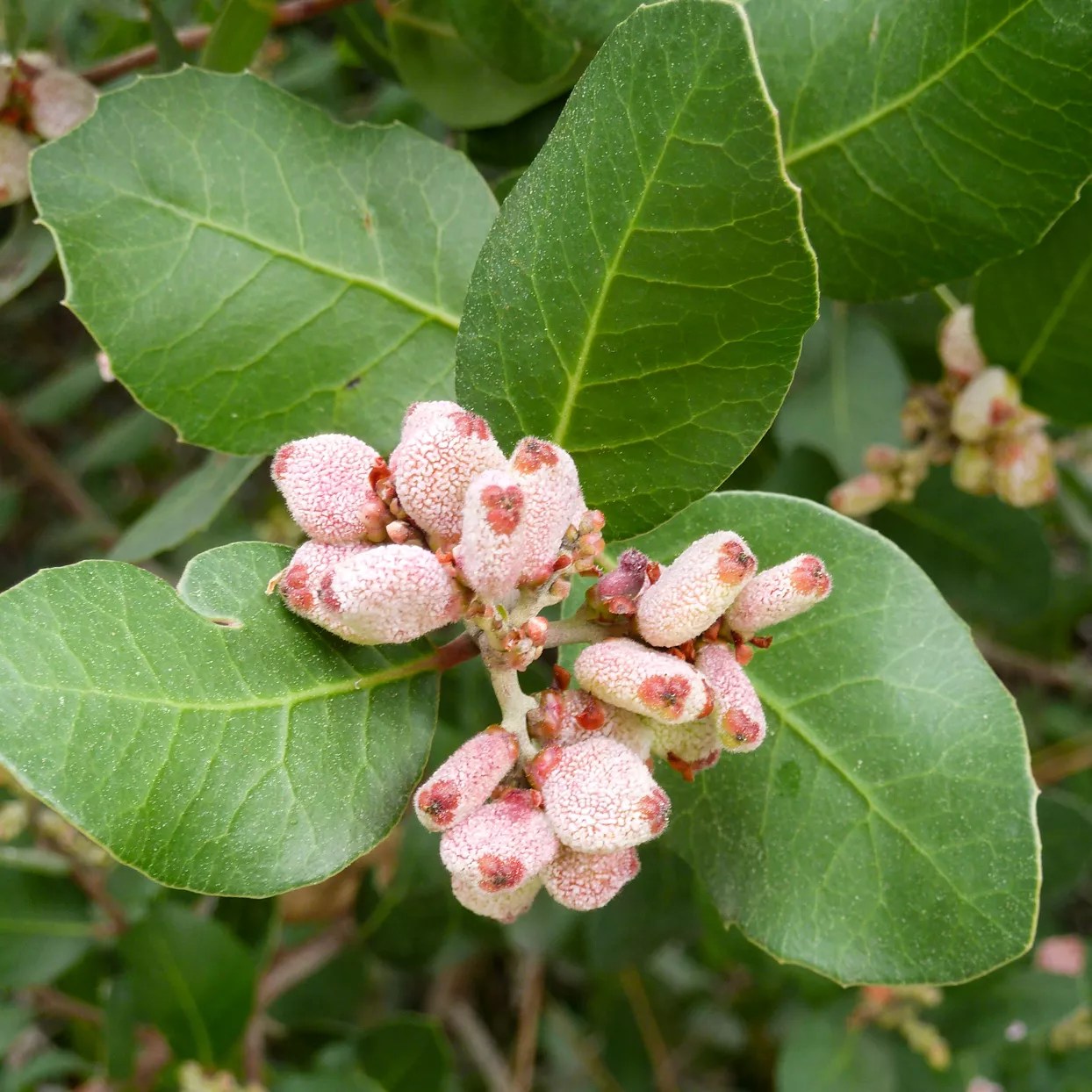
Lemonade Berry
Rhus integrifolia , also roll in the hay as lemonade sumac , lemonade berry , or lemonadeberry , is a Southern California native plant that is extremely drought - liberal . It reaches up to 10 foot tall inland but may remain under 3 substructure tall near the sea-coast . The shrub spreads 10 - 15 foot wide-cut . Clumps of pinkish - white flowers develop into reddish - pink fruit . Zones 9 - 10 .
Staghorn Sumac
genus Rhus typhinacolonizes to form agrove of belittled treesor large bush 15 - 25 feet tall and all-encompassing . It gets its common name from the visual aspect of bare winter branches . The furcate shoot are embrace with hairs , resemble deer antler in the velvet degree . Female flora train panicle of scarlet yield that persist through winter . Fall colouring is splendid . Zones 4 - 8 .
‘Tiger Eyes’ Sumac
genus Rhus typhina’Tiger Eyes ' is an exceptionally showy pick of staghorn sumac that feature Paris green foliage all leap and summertime . In fall , the leaves reverse glorious Orange River . The leave-taking , stems , and Charles Edward Berry are all fuzzy . It grows 8 feet tall and broad . Zones 4 - 8 .
Frequently Asked Questions
Sumac brook out by its brilliant ruby-red declension colouration and distinctive red semen cones , whereas toxicant sumac has white berries . The toxicant sumach farewell have smooth edge , whereas those of sumach are toothed . The location can only give clew : Poison sumach grows primarily in cockeyed , swampy country , and shumac grows anywhere , including in dry sites , along roadsides , etc . Sumac grows in colonies , and poison sumac is more often a alone bush .
The lifespan of most sumach types rarely exceeds 50 long time . However , the bush perpetuate itself by scatter via suckers that take form new works .
Although aboriginal industrial plant are usually not regard invasive , sumac is problematic because of its tendency to spread aggressively . If leave behind unchecked , sumac sends up suckers that can mould dense colonies , shading out other plants . Sumac spreads mostly via its root , and some shumac also spread out via seed . Deadhead the spend bloom if ego - seeding is a business .

Credit: Denny Schrock
Updated by Nadia Hassani

Credit: Denny Schrock

Credit: Denny Schrock

Credit: Denny Schrock

Credit: Peter Krumhardt

Credit: Denny Schrock

Credit: Adam Albright
Credit: Denny Schrock

Credit: Jason Donnelly

Credit: Marty Baldwin
